
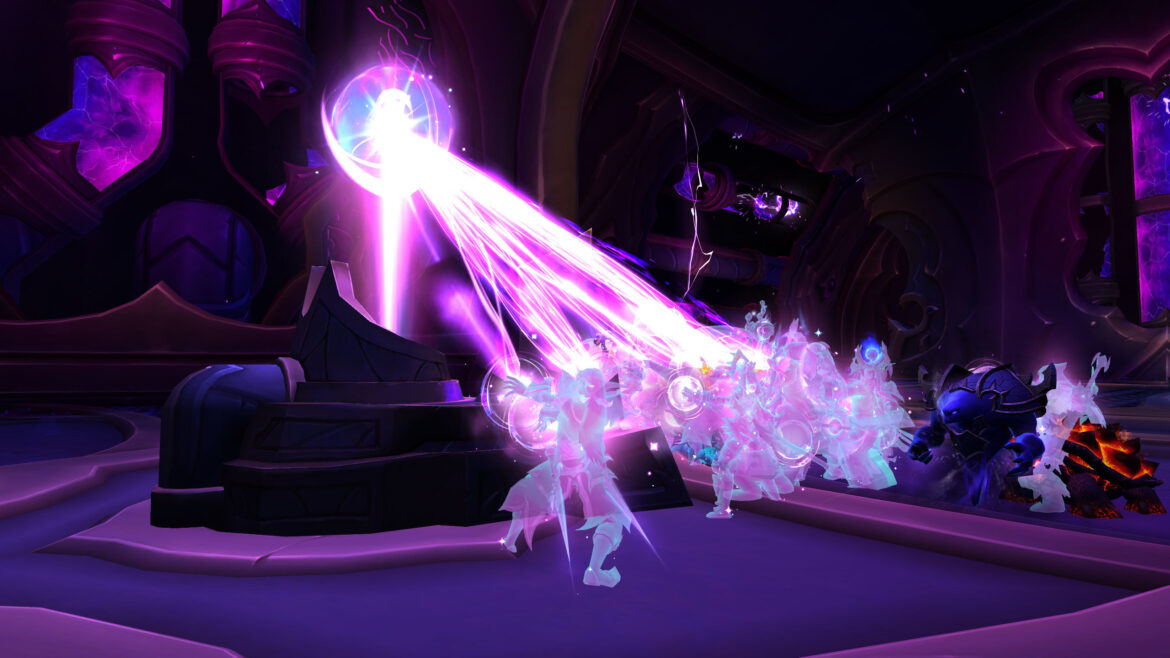
Tank swaps are among the most failure-sensitive mechanics in raid encounters. While they appear simple on the surface, successful execution depends on precise threat awareness, positioning, and timing. Off-Tank Taunt Discipline is the threat control skill that determines whether swaps feel invisible or become chaotic, wipe-inducing events.
When executed correctly, tank swaps result in Seamless Transfers, where the boss remains stable, debuff timing is preserved, and DPS uptime is uninterrupted. When discipline breaks down, groups experience Accidental Main Tanking, unexpected boss movement, healer panic, and avoidable deaths.
High-end encounters assume that off-tanks understand not only when to taunt, but how to manage threat before the taunt ever happens.
Understanding the Threat Buffer
Threat is not binary. It is a gradient that must be actively controlled. The off-tank’s job is to remain close enough to the main tank’s threat to guarantee a clean taunt, while never crossing the aggro threshold prematurely. This range is commonly referred to as the threat buffer.
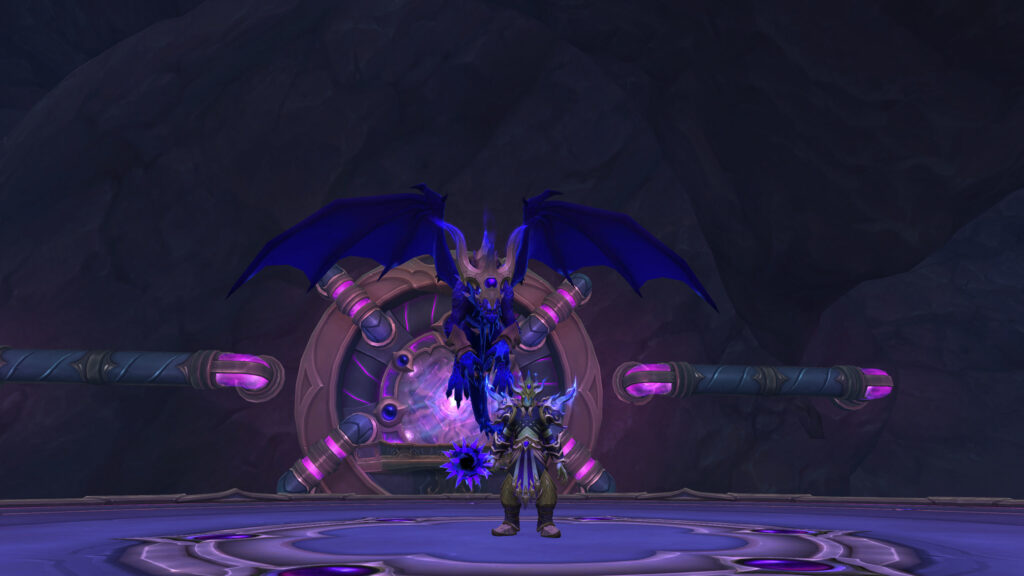
Maintaining this buffer allows the taunt to function as a deliberate handoff rather than an emergency correction. When the buffer is mismanaged, the boss may snap unpredictably, rotate, or reset critical mechanics.
Accidental main tanking often happens during high raid burst windows, where off-tanks continue full rotations without adjusting threat output. Discipline requires awareness of both personal output and encounter pacing.
The Taunt Discipline Protocol
Reliable tank swaps are built on anticipation, not reaction. The following protocol ensures threat remains controlled even under pressure:
- Threat Buffer Management: The off-tank maintains approximately 90–95% of the main tank’s threat, throttling high-threat abilities during raid burst phases to prevent premature aggro.
- Preemptive Taunt Timing: The taunt is used slightly before the main tank’s debuff becomes lethal or before required boss repositioning, ensuring uninterrupted tank coverage.
- Positional Readiness: The off-tank must already be standing at the designated anchor point before taunting to prevent boss drift or rotation.
These steps remove ambiguity and prevent last-second scrambles that destabilize the pull.
Why Tank Swaps Fail Under Pressure
Most taunt failures occur during moments of stress: execute phases, healer cooldown rotations, or overlapping mechanics. In these moments, off-tanks may tunnel on rotation or survival and lose threat awareness.
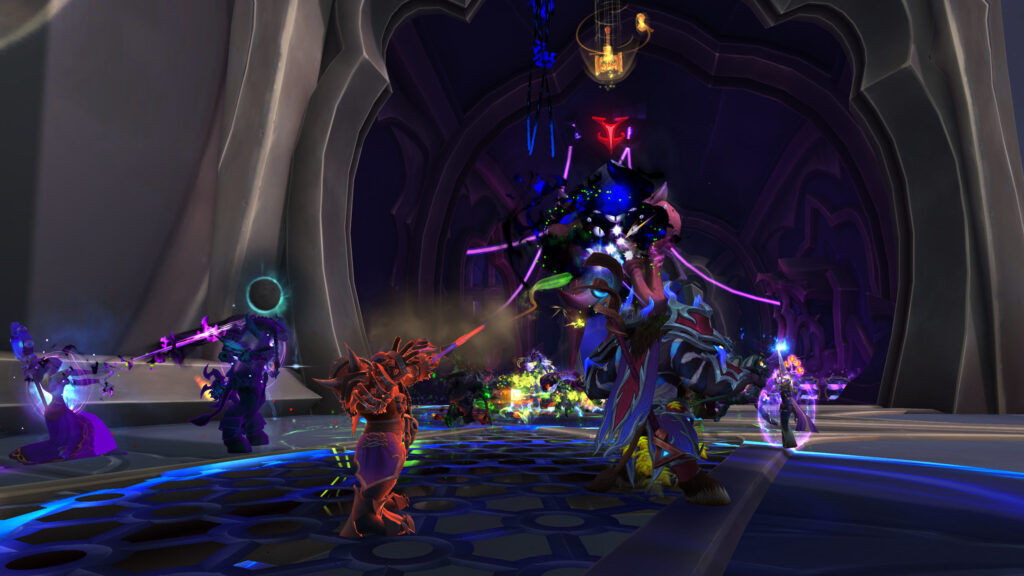
Delayed taunts lead to lethal debuff stacks. Early taunts disrupt positioning and timing. Both outcomes force healers into emergency responses and often consume battle resurrection resources.
Clean swaps preserve rhythm. Failed swaps break it.
Consequences of Taunt Discipline Failure
Poor taunt discipline has ripple effects that extend far beyond the tanks themselves.
| Failure Mode | Immediate Result | Encounter Impact |
|---|---|---|
| Premature over-aggro | Accidental main tanking | Boss repositioning, disrupted melee uptime |
| Late taunt | Main tank death | Battle resurrection usage or wipe |
| Movement during taunt | Boss drift or spin | Positional failures and cleave damage |
Why Discipline Creates Invisible Success
The best tank swaps are barely noticed. Boss positioning remains consistent, damage patterns remain predictable, and healers execute planned cooldown rotations.
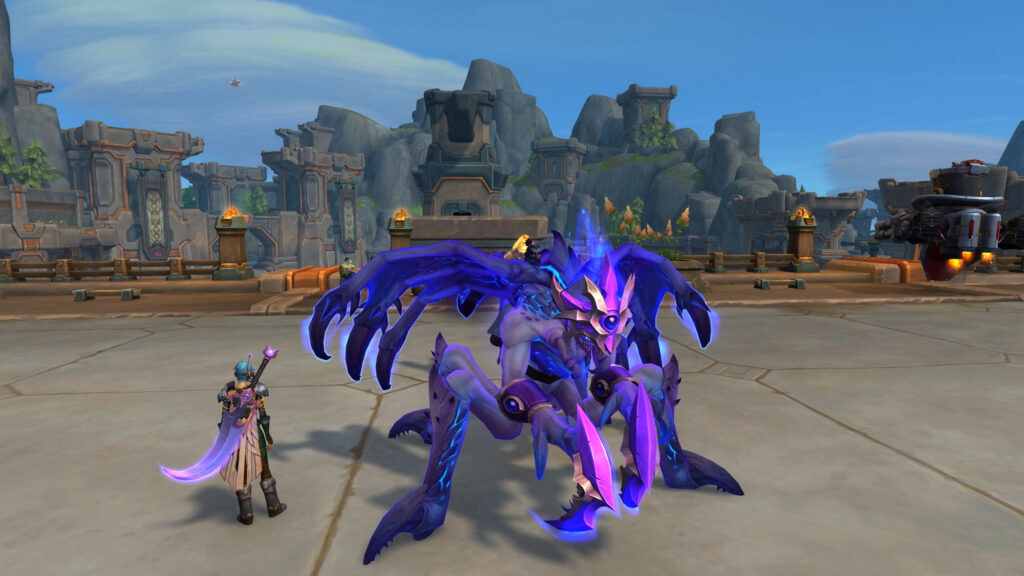
This invisibility is the result of discipline. Off-tanks who manage threat intentionally enable the entire raid to play cleaner and calmer.
Conclusion
Off-tank taunt discipline is not optional—it is a foundational threat control skill. By maintaining a controlled threat buffer, taunting preemptively, and respecting positional requirements, off-tanks enable seamless transfers.
This discipline prevents accidental main tanking, preserves encounter stability, and protects the group from unnecessary chaos and resource loss.